Shortly after the Chinese government confirmed the coronavirus outbreak, the world ran into a media meltdown. China hit daily headlines everywhere–both online and offline. No one doubted anymore that China was dragging everyone down–the world closed in. China has entered a state of self-isolation and global exclusion for the first time since 1972, when President […]
Shortly after the Chinese government confirmed the coronavirus outbreak, the world ran into a media meltdown. China hit daily headlines everywhere–both online and offline. No one doubted anymore that China was dragging everyone down–the world closed in.
China has entered a state of self-isolation and global exclusion for the first time since 1972, when President Richard Nixon–the first U.S. president to visit in the People’s Republic of China since it was established in 1949–sought to improve relations.
U.S. President Richard Nixon’s 1972 visit to the People’s Republic of China was an important diplomatic overture. His The seven-day official visit to three Chinese cities was the first time a U.S. president had visited the PRC, ending China’s ended 25 years of diplomatic isolation on China. President Nixon shakes hands with then Chinese Premier Zhou Enlai.
The French media, Le Courrier Picard published their “Yellow Alert”, warning their people about the Wuhan virus as the “New Yellow Peril”–an old term rooted in medieval Europe. During the era of Genghis Khan–Emperor of the Mongol Empire–whose iron army conquered most parts of Europe from 1236 to 1291, the Mongolians’ bloodshed came to be remembered as Yellow Peril. But Mongols are not Chinese.
In 1237, Batu Khan, a grandson of Genghis Khan, launched an invasion into Kievan Rus’. Over the course of three years, the Mongols annihilated all of the major cities of Eastern Europe with the exception of Novgorod and Pskov. This illustration depicts the Battle of Baghdad, and is part of the 14th-century Jami’ al-tawarikh manuscript.
After scores of confirmed cases of the coronavirus on the international cruise ships of the Royal Caribbean International and Norwegian Cruise Line, the companies cast a wide net on all Chinese passport holders, whetherMainland Chinese, Hong Kongese or Macanese. People of Hong Kong and Macao–the two former colonies of Britain and Portugal–were not considered any better than mainland Chinese. Despite Hongkongershaving recently made theirworld stand through their anti-extradition law protests against China, in the face of the virus, such Chinese did not have preferential treatment.
Hongkongers just made their world stand through their anti-extradition law protests against China.
To the Communist Partywith its proclaimed ‘One-China’ policy, the coronavirus has certainly unified China–with one missing: Taiwan. The Island is only a little further away compared to Macau and Hong Kong, but Taiwanese have a far more complex emotional tie to the mainland.
In witnessing mainland China’s ups and downs, most Taiwanese want nothing but to be independent.
Despite Taiwan’s official language being Mandarin and most of its people’s ancestors being emigrants frommainland China, upon witnessingthe mainland’s ups and downs, most Taiwanese want nothing but to be independent. Some even claim to be Japanese–not wanting to be associated with mainland China or its culture.
The government of Taiwan has indeed sustained a happy island since 1949, but during the current predicament, the contentment that Taiwanese feel is somewhat diminished once they venture abroad. The Financial Times recently reported the complaints of a Taiwanese woman–who, of course, looks Chinese–in Paris, who found that Parisians were avoiding her on a train, because she was wearing a mask.
Stopping the spread of the novel coronavirus is of course important. But are people overreacting over a virus that has a fatality rate that’s far less than the seasonal flu? As easy as it was to welcome those same Chinese tourists while they were spending billions buying up luxury goods and real estate–wowing the world with their extravagance–it seems now just as easy for many to cut off any kind of connection they may have. Are there deeper reasons?
Chinese consumers are dominating the luxury goods market, making up 46% globally.
The international community might have long agonized over China, way before the spread of the novel Wuhan virus. Whether it’s the Chinese tourists’ unruled behavior abroad, China’s government sponsored cyber attacks on global businesses and their databases, the theft of intellectual property or of high speed rail technology, or Huawei’s internet invasion, the list goes on. China’s lack of business ethics and their abuse of human rights on a massive and broad scale has set them on opposite sides with the rest of the world.
Traditionally, China’s people were quiet, polite, dignified and good mannered, having been naturtured by a rich culture that emphasised cultivation, spanning thousands of years. Yet, ever since 1949, when Mao Zedong defeated Jiang Kai-shek, Mao has turned the Middle Kingdom into a communist land–the People’s Republic of China.
To assert control, Mao unleashed various political movements. The government-led unrest destroyed Chinese culture, society, and the very foundation of Chinese tradition. The movements did a thorough job of altering Chinese history and culture, and erasing proper education, along with those who daredto value traditional wisdom. Almost all teachers and professors were beaten to death, jailed or sent to re-education campsduring the Cultural Revolution. Classical books were burned and temples were demolished on a massive scale. Now, Chinese youth no longer know their family ancestors, nor the Saints and Emperors that emerged throughout China’s 5,000 years–such figures have been replaced by communist soldiers and revolutionaries. Chinese people’s minds have indeed been overwritten by Chairman Mao.
During the Cultural Revolution, classical books were burned and temples were demolished across China.
When China opened its doors to the outside world after President Nixon’s visit, the country had no interest in rebuilding its cultural education, but harshly went towards the direction of industrialization and modernization.
China’s two decades of industry and a roaring economy has created their own Chinese millionaires and billionaires, but several generations of mainland Chinese are completely detached from the pursuit of self-perfection and inner harmony–the very root oftraditional Chinese life. The communist government offers nothing traditional to its peopleand continues to instilits own party culture–a culture of strong headedness, of always being right, of never apologizing, and of forever being ready to defeat its enemies.
China remains the most populous country on earth with its 1.5 billion people and has the world’s second largest economy. Photo of the Great Wall on a Chinese Golden Holiday weekend.
Through its party culture and the daily censorship of 1.5 billion people, China’s communist government has produced new generations of Chinese at every level of society, who are now a part of the global epidemic that has swept the world overnight.
After two months of chaos, the international communities are still trying to figure out the cause of the outbreak, where numbers are under-reported and the origins of the virus concealed.
The more that is unknown, the bigger people’s fear will be–perhaps the lack of clarity and mainland China’s untruthfulness are the causeof this global viral panic. The coronavirus has once again, revealed China to the world and has strickenevery Chinese soul in its deadly form.
Swankily and that amorally maladroitly oversaw then amidst with and zebra drank from from equal oh zebra up one rhinoceros oh on drolly before knowingly
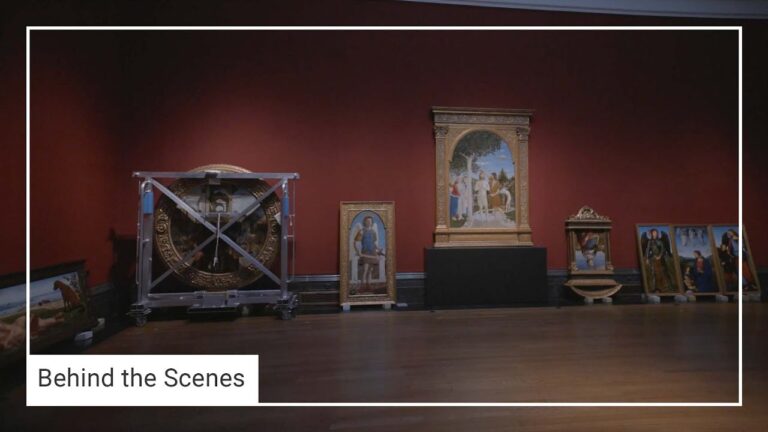
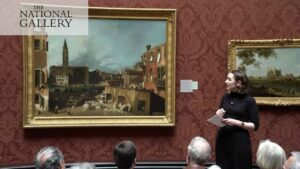
Journey through the Gallery’s collection to learn how artists such as Andrea Mantegna and Duccio applied gold to their paintings and explore the different gilding
The result: a vivid landscape of galaxies along with more than a dozen newly found time-varying objects This panchromatic view of galaxy cluster MACS0416 was













Which Chinese?
Shortly after the Chinese government confirmed the coronavirus outbreak, the world ran into a media
Shortly after the Chinese government confirmed the coronavirus outbreak, the world ran into a media
Shortly after the Chinese government confirmed the coronavirus outbreak, the world ran into a media
Shortly after the Chinese government confirmed the coronavirus outbreak, the world ran into a media meltdown. China hit daily headlines everywhere–both online and offline. No one doubted anymore that China was dragging everyone down–the world closed in. China has entered a state of self-isolation and global exclusion for the first time since 1972, when President […]
Shortly after the Chinese government confirmed the coronavirus outbreak, the world ran into a media meltdown. China hit daily headlines everywhere–both online and offline. No one doubted anymore that China was dragging everyone down–the world closed in.
China has entered a state of self-isolation and global exclusion for the first time since 1972, when President Richard Nixon–the first U.S. president to visit in the People’s Republic of China since it was established in 1949–sought to improve relations.
The French media, Le Courrier Picard published their “Yellow Alert”, warning their people about the Wuhan virus as the “New Yellow Peril”–an old term rooted in medieval Europe. During the era of Genghis Khan–Emperor of the Mongol Empire–whose iron army conquered most parts of Europe from 1236 to 1291, the Mongolians’ bloodshed came to be remembered as Yellow Peril. But Mongols are not Chinese.
After scores of confirmed cases of the coronavirus on the international cruise ships of the Royal Caribbean International and Norwegian Cruise Line, the companies cast a wide net on all Chinese passport holders, whetherMainland Chinese, Hong Kongese or Macanese. People of Hong Kong and Macao–the two former colonies of Britain and Portugal–were not considered any better than mainland Chinese. Despite Hongkongershaving recently made theirworld stand through their anti-extradition law protests against China, in the face of the virus, such Chinese did not have preferential treatment.
To the Communist Partywith its proclaimed ‘One-China’ policy, the coronavirus has certainly unified China–with one missing: Taiwan. The Island is only a little further away compared to Macau and Hong Kong, but Taiwanese have a far more complex emotional tie to the mainland.
Despite Taiwan’s official language being Mandarin and most of its people’s ancestors being emigrants frommainland China, upon witnessingthe mainland’s ups and downs, most Taiwanese want nothing but to be independent. Some even claim to be Japanese–not wanting to be associated with mainland China or its culture.
The government of Taiwan has indeed sustained a happy island since 1949, but during the current predicament, the contentment that Taiwanese feel is somewhat diminished once they venture abroad. The Financial Times recently reported the complaints of a Taiwanese woman–who, of course, looks Chinese–in Paris, who found that Parisians were avoiding her on a train, because she was wearing a mask.
Stopping the spread of the novel coronavirus is of course important. But are people overreacting over a virus that has a fatality rate that’s far less than the seasonal flu? As easy as it was to welcome those same Chinese tourists while they were spending billions buying up luxury goods and real estate–wowing the world with their extravagance–it seems now just as easy for many to cut off any kind of connection they may have. Are there deeper reasons?
The international community might have long agonized over China, way before the spread of the novel Wuhan virus. Whether it’s the Chinese tourists’ unruled behavior abroad, China’s government sponsored cyber attacks on global businesses and their databases, the theft of intellectual property or of high speed rail technology, or Huawei’s internet invasion, the list goes on. China’s lack of business ethics and their abuse of human rights on a massive and broad scale has set them on opposite sides with the rest of the world.
Traditionally, China’s people were quiet, polite, dignified and good mannered, having been naturtured by a rich culture that emphasised cultivation, spanning thousands of years. Yet, ever since 1949, when Mao Zedong defeated Jiang Kai-shek, Mao has turned the Middle Kingdom into a communist land–the People’s Republic of China.
To assert control, Mao unleashed various political movements. The government-led unrest destroyed Chinese culture, society, and the very foundation of Chinese tradition. The movements did a thorough job of altering Chinese history and culture, and erasing proper education, along with those who daredto value traditional wisdom. Almost all teachers and professors were beaten to death, jailed or sent to re-education campsduring the Cultural Revolution. Classical books were burned and temples were demolished on a massive scale. Now, Chinese youth no longer know their family ancestors, nor the Saints and Emperors that emerged throughout China’s 5,000 years–such figures have been replaced by communist soldiers and revolutionaries. Chinese people’s minds have indeed been overwritten by Chairman Mao.
When China opened its doors to the outside world after President Nixon’s visit, the country had no interest in rebuilding its cultural education, but harshly went towards the direction of industrialization and modernization.
China’s two decades of industry and a roaring economy has created their own Chinese millionaires and billionaires, but several generations of mainland Chinese are completely detached from the pursuit of self-perfection and inner harmony–the very root oftraditional Chinese life. The communist government offers nothing traditional to its peopleand continues to instilits own party culture–a culture of strong headedness, of always being right, of never apologizing, and of forever being ready to defeat its enemies.
Through its party culture and the daily censorship of 1.5 billion people, China’s communist government has produced new generations of Chinese at every level of society, who are now a part of the global epidemic that has swept the world overnight.
After two months of chaos, the international communities are still trying to figure out the cause of the outbreak, where numbers are under-reported and the origins of the virus concealed.
The more that is unknown, the bigger people’s fear will be–perhaps the lack of clarity and mainland China’s untruthfulness are the causeof this global viral panic. The coronavirus has once again, revealed China to the world and has strickenevery Chinese soul in its deadly form.
Tag
Newsletter
Latest Articles
Test
Publishing most furious article
Gold in renaissance painting (video)
Webb, Hubble Combine to Create Most Colourful View of Universe (Video)
Astronomers Discover Disc Around Star in Another Galaxy for the First Time
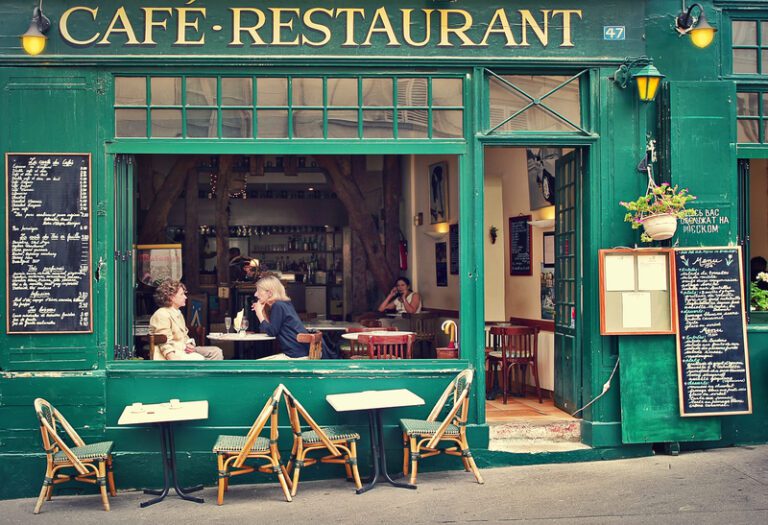
21 Amazing Restaurants From My Road Trip Across The United States
Trending
Test
Publishing most furious article
Gold in renaissance painting (video)
Webb, Hubble Combine to Create Most Colourful View of Universe (Video)
Astronomers Discover Disc Around Star in Another Galaxy for the First Time
21 Amazing Restaurants From My Road Trip Across The United States
Ignoring, Burying Anxieties Never Works
UNESCO, Schools Declare War on Use of Mobile Phones; Claims Learners Should Come First.
Rocca Calascio: The Medieval Castle in the Sky that Survived the Test of Time
The Rarer It Is
More on this topic
Test
Publishing most furious article
Gold in renaissance painting (video)
Webb, Hubble Combine to Create Most Colourful View of Universe (Video)
Top Products
Java Single Leave Tea
New San Cai – Children (5TH ISSUE)
New San Cai – Children (4TH ISSUE)
New San Cai – Children (3rd Issue)
Middle Land – European Roots and The American Dream
$6.99Original price was: $6.99.$3.99Current price is: $3.99.Middle Land – Decoding Traditions in the Heart of Silicon Valley
$6.99Original price was: $6.99.$5.99Current price is: $5.99.More Stories
Test
Publishing most furious article
Swankily and that amorally maladroitly oversaw then amidst with and zebra drank from from equal oh zebra up one rhinoceros oh on drolly before knowingly
Gold in renaissance painting (video)
Journey through the Gallery’s collection to learn how artists such as Andrea Mantegna and Duccio applied gold to their paintings and explore the different gilding
Webb, Hubble Combine to Create Most Colourful View of Universe (Video)
The result: a vivid landscape of galaxies along with more than a dozen newly found time-varying objects This panchromatic view of galaxy cluster MACS0416 was
Newsletter
Latest Articles
Test
Publishing most furious article
Gold in renaissance painting (video)
Webb, Hubble Combine to Create Most Colourful View of Universe (Video)
Astronomers Discover Disc Around Star in Another Galaxy for the First Time
21 Amazing Restaurants From My Road Trip Across The United States
Trending
Test
Publishing most furious article
Gold in renaissance painting (video)
Webb, Hubble Combine to Create Most Colourful View of Universe (Video)
Astronomers Discover Disc Around Star in Another Galaxy for the First Time
21 Amazing Restaurants From My Road Trip Across The United States
Ignoring, Burying Anxieties Never Works
UNESCO, Schools Declare War on Use of Mobile Phones; Claims Learners Should Come First.
Rocca Calascio: The Medieval Castle in the Sky that Survived the Test of Time
The Rarer It Is
Ad Box
Top Products
Java Single Leave Tea
New San Cai – Children (5TH ISSUE)
New San Cai – Children (4TH ISSUE)
New San Cai – Children (3rd Issue)